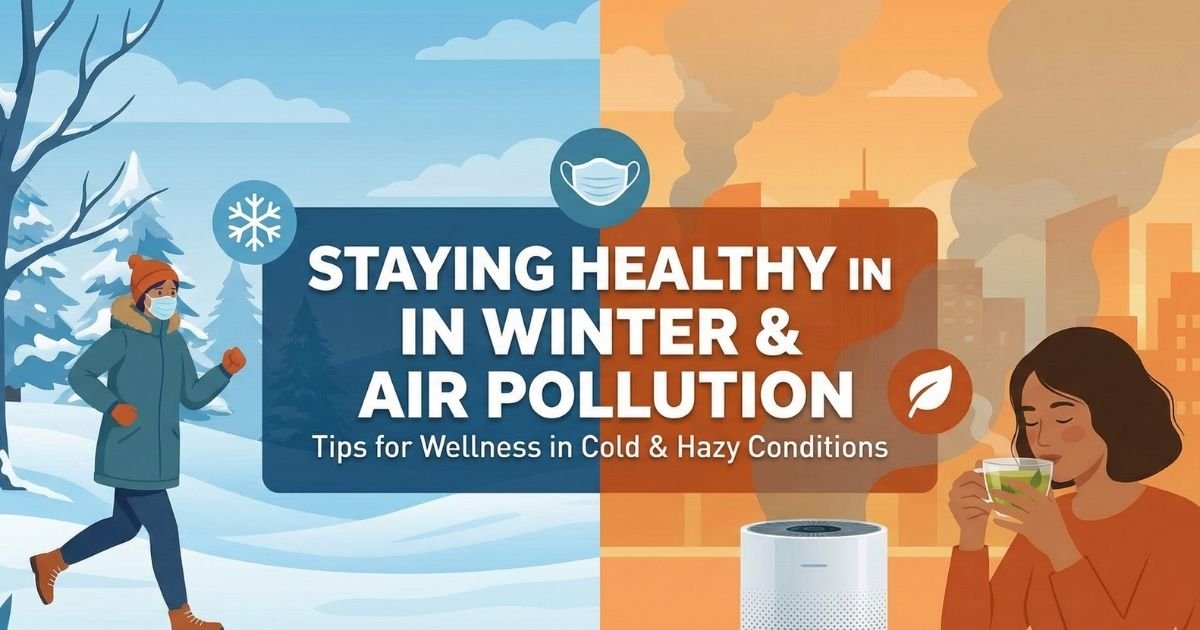
Winter brings with it a unique mix of comfort and concern.
While cooler temperatures are often welcomed, winters—especially in urban and semi-urban areas—also coincide with rising air pollution, increased respiratory illnesses, and lifestyle changes that negatively impact health.
For countries like India, the winter season has increasingly become synonymous with poor air quality, smog, and a spike in infections.
Maintaining good health during this period requires awareness, prevention, and small but consistent lifestyle adjustments.
This blog explores why winters and air pollution are dangerous, who is most at risk, and how you can protect yourself and your family
effectively.
Why Winters and Air Pollution Are a Dangerous Combination
During winters, atmospheric conditions change.
Cooler air traps pollutants close to the ground due to temperature inversion, preventing their dispersion.
Vehicle emissions, industrial smoke, crop residue burning, construction dust, and household fuels accumulate, leading to hazardous air quality.
At the same time, winter causes:
– Reduced sunlight exposure
– Dry air and cold stress
– Increased indoor crowding
These factors together increase vulnerability to respiratory infections, asthma exacerbations, heart disease, and weakened immunity.
According to World Health Organization, air pollution is one of the leading environmental risk factors for premature mortality worldwide, and its effects are amplified during colder months.
Who Is Most at Risk?
While air pollution affects everyone, certain groups are particularly vulnerable:
– Children – developing lungs are highly sensitive
– Elderly individuals – reduced lung reserve and immunity
– People with asthma, COPD, or heart disease
– Pregnant women – risk to both mother and fetus
– Outdoor workers – prolonged exposure to polluted air
– Recognizing vulnerability helps in adopting targeted preventive strategies.
– Common Health Problems During Winter Pollution
1. Respiratory Illnesses
– Polluted air irritates airways, leading to:
– Persistent cough
– Wheezing and breathlessness
– Frequent colds and sore throat
– Worsening of asthma and COPD
2. Cardiovascular Risks
Fine particulate matter (PM2.5) enters the bloodstream and increases the risk of:
– Heart attacks
– Stroke
– Uncontrolled hypertension
3. Eye, Skin, and Throat Irritation
Dry polluted air causes:
– Burning or itchy eyes
– Dry, cracked skin
– Throat discomfort and hoarseness
4. Reduced Immunity
Lack of sunlight, vitamin D deficiency, and pollution-induced inflammation weaken immune responses.
Practical Tips to Stay Healthy During Winters and Air Pollution
1. Monitor Air Quality Regularly
– Check the Air Quality Index (AQI) daily using reliable apps or local advisories.
-Avoid outdoor activities when AQI is poor or worse
– Plan walks or exercise when pollution levels are lowest (usually late afternoon)
2. Protect Your Airways Outdoors
– Use well-fitted N95 or equivalent masks during high pollution days
– Cover your nose and mouth with a scarf in cold air
– Avoid busy traffic intersections during peak hours
3. Improve Indoor Air Quality
– Keep windows closed during high pollution periods
– Use air purifiers with HEPA filters if possible
– Avoid indoor smoking, incense sticks, and mosquito coils
– Ensure proper ventilation while cooking
4. Strengthen Your Immunity Through Nutrition
A strong immune system is your best defense. Include:
– Vitamin C–rich foods: citrus fruits, amla, guava
– Vitamin D sources: sunlight exposure, fortified foods
– Antioxidants: green leafy vegetables, berries, nuts
– Omega-3 fatty acids: walnuts, flaxseeds, fish
Stay well hydrated despite reduced thirst in winter.
5. Exercise Smartly
Physical activity remains essential, but adapt it wisely:
– Prefer indoor workouts, yoga, stretching, or pranayama
– Avoid jogging or cycling outdoors during high pollution
– Maintain regular movement to improve lung capacity and circulation
6. Protect Skin and Eyes
– Use moisturizers to prevent dryness
– Wash face and eyes after outdoor exposure
– Wear sunglasses to reduce eye irritation
7. Prevent Infections
– Wash hands frequently
– Avoid close contact with people having respiratory infections
– Get recommended vaccinations, including influenza and COVID boosters if eligible
Special Advice for Patients with Chronic Diseases
If you have asthma, COPD, heart disease, or diabetes:
– Continue medications regularly without interruption
– Keep inhalers and rescue medications accessible
– Do not self-adjust doses without medical advice
– Seek early consultation if symptoms worsen
– Ignoring early signs often leads to hospitalizations during winter months.
Mental Health Matters Too
Reduced sunlight and confinement indoors can affect mental well-being, leading to low mood and fatigue.
To counter this:
– Maintain social connections
– Ensure adequate sleep
– Engage in hobbies and relaxation techniques
– Spend time in natural light whenever possible
– Small Daily Habits That Make a Big Difference
– Gargle with warm salt water for throat health
– Drink warm fluids like soups and herbal teas
– Avoid unnecessary outdoor exposure
– Encourage children to wear masks properly
– Educate family members about pollution safety
– Consistency is more important than perfection.
When Should You See a Doctor?
Seek medical help if you experience:
– Persistent cough or breathlessness
– Chest pain or palpitations
– Frequent wheezing or nighttime symptoms
– Fever lasting more than 2–3 days
– Early intervention prevents complications.
Final Thoughts
Winters and air pollution are no longer temporary inconveniences—they are predictable health challenges.
While we may not control environmental conditions entirely, we can control our responses.
Awareness, prevention, and timely care go a long way in protecting respiratory, cardiac, and overall health.
By making thoughtful lifestyle choices, monitoring air quality, strengthening immunity, and seeking medical advice when needed, you can stay healthy even during the harshest winter pollution days.
Your health is not seasonal—protect it all year round.
Very informative .
Thanks