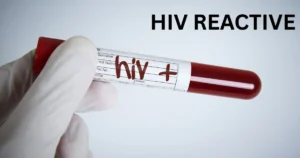
Seeing the words “HIV Reactive” on a laboratory report can be frightening.
For many people, the first thoughts are about their health, relationships, marriage, children and future.
But before reaching any conclusion, it is important to understand one crucial distinction. A reactive HIV screening test is not always a confirmed HIV diagnosis
At the same time, a reactive result should never be ignored. It requires appropriate confirmatory testing and timely medical evaluation.
And if HIV infection is confirmed, there is encouraging news: modern treatment allows people living with HIV to lead long, healthy and productive lives.
Here is what you need to know.
What Does an HIV-Reactive Test Mean?
An HIV screening test looks for antibodies against HIV, HIV antigens or both, depending on the type of test performed.
A reactive result means that the test has detected a signal suggesting possible HIV infection.
However, screening tests are not perfect. Occasionally, a person without HIV may receive a reactive result.
This is called a false-reactive result.
The possibility of a false-reactive result is one reason HIV diagnosis requires a validated testing algorithm.
Remember:
Reactive means further testing is required. It does not automatically mean HIV is confirmed.
How Is HIV Confirmed in India?
The National AIDS Control Organisation (NACO) has established specific HIV testing algorithms.
For asymptomatic adults in the general population, the national diagnostic strategy uses three different approved assays performed sequentially.
When all three are reactive according to the prescribed algorithm, HIV infection is confirmed. If the tests produce conflicting results, additional evaluation or repeat testing may be necessary.
The testing approach may differ in people with symptoms suggestive of advanced HIV infection or suspected very recent infection.
You can obtain appropriate testing through an Integrated Counselling and Testing Centre (ICTC) or an experienced HIV specialist.
An important point: Repeating the same screening test several times is not necessarily equivalent to undergoing the recommended confirmatory algorithm.
What Should You Do After a Reactive Result?
There are five practical steps.
Step 1: Consult an experienced doctor.
An Infectious diseases or HIV specialist can interpret your report and advise on further testing.
Step 2: Complete confirmatory testing.
Do not assume that the first screening result establishes your diagnosis.
Step 3: Discuss your exposure history.
Tell your doctor about any recent unprotected sexual exposure, previous HIV testing and use of HIV-prevention medicines.
Step 4: Avoid self-medication.
Do not start antiretroviral medicines based solely on an unconfirmed screening result without appropriate clinical assessment.
Step 5: Protect your partner while your status is being clarified.
Use condoms, avoid sharing needles and discuss whether your partner needs HIV testing or preventive medication.
Most importantly, do not allow fear or embarrassment to delay medical care.
Can HIV Testing Be Negative Even After Infection?
Yes. This can happen when testing is performed too early.
Every HIV test has a window period, which is the interval between acquiring HIV and when the infection can be detected.
Typical detection windows include:
- Laboratory-based fourth-generation HIV test: Approximately 18–45 days after exposure.
- Antibody-only HIV test: Approximately 23–90 days.
- HIV RNA test: Approximately 10–33 days.
These timelines depend on the type of test and assume the person has not taken antiretroviral medicines that could delay detection.
A negative test during the window period may require repeat testing.
If recent HIV infection is suspected, your doctor may recommend an HIV RNA test.
However, HIV RNA testing does not routinely replace the standard confirmatory testing algorithm.
What If You Had Unprotected Sex Within the Last 72 Hours?
This is particularly important.
If you have recently experienced a potentially significant exposure to HIV, you may be eligible for Post-exposure prophylaxis (PEP)
PEP consists of antiretroviral medicines given after exposure to reduce the risk of acquiring HIV.
It should be started as soon as possible, ideally within 24 hours and no later than 72 hours after exposure, when clinically indicated.
PEP is generally taken for 28 days.
If your initial HIV test is reactive, urgent medical evaluation is required to clarify your status and determine the appropriate treatment or prevention pathway.
Do not wait several days for an appointment if you may need PEP.
What Happens If HIV Is Confirmed?
A confirmed HIV diagnosis is no longer the devastating prognosis it was several decades ago. With effective treatment, HIV has become a manageable chronic medical condition. Treatment is called antiretroviral therapy (ART).
ART suppresses the multiplication of HIV, protects the immune system and substantially reduces the risk of HIV-related illness.
Current international guidelines recommend starting ART as soon as possible after diagnosis, regardless of the CD4 count, although certain serious opportunistic infections require individualized timing.
There is no benefit in waiting for symptoms or allowing the CD4 count to fall before starting treatment.
Which Investigations Are Needed After Confirmation?
Your doctor will usually advise baseline investigations, including:
- CD4 count: Assesses immune function.
- HIV viral load: Measures the amount of virus in the blood.
- Complete blood count: Checks haemoglobin, white blood cells and platelets.
- Kidney and liver function tests: Help guide treatment selection and monitoring.
- Hepatitis B and C screening: Identifies important coinfections.
- Tuberculosis assessment: Particularly important in India.
- Syphilis and other STI testing: According to individual risk.
Additional investigations depend on symptoms, clinical examination, medical history and treatment requirements.
Most routine baseline investigations should not unnecessarily delay ART initiation.
Can Someone With HIV Live a Normal Life?
Yes. With early diagnosis, effective treatment and regular follow-up, many people living with HIV can expect a long and healthy life.
They can work, travel, exercise, marry and pursue family life.
Many people require only a simple daily antiretroviral regimen, although treatment choices vary.
The key is taking treatment consistently and monitoring the response through regular viral load testing.
HIV treatment is generally lifelong. Stopping medication without medical advice can allow the virus to multiply again.
Can HIV Be Transmitted to a Sexual Partner Despite Treatment?
This is one of the most important advances in HIV medicine.
Scientific studies have established the concept of:
U = U: Undetectable = Untransmittable.
When a person living with HIV takes effective ART and maintains a suppressed viral load below 200 copies/mL, they do not transmit HIV through sex.
This evidence has transformed HIV care and has helped reduce stigma.
However, U=U requires sustained viral suppression and appropriate monitoring. It does not protect against other sexually transmitted infections.
Can People Living With HIV Get Married and Have Children?
Yes.
HIV does not prevent someone from having a meaningful relationship or planning a family.
With effective ART, appropriate medical care and pregnancy-specific prevention measures, the risk of HIV transmission to a baby can be reduced to very low levels.
Couples in which one partner has HIV and the other does not can also plan pregnancy with specialist guidance.
Treatment, prevention strategies and individual reproductive circumstances should be discussed before conception.
Will My HIV Status Remain Confidential?
In India, the HIV and AIDS (Prevention and Control) Act, 2017 provides important protections concerning confidentiality and discrimination.
HIV-related medical information should be handled confidentially, subject to specific legal exceptions.
Partner testing and disclosure should be approached through appropriate counselling, with consideration of safety and individual circumstances.
Fear of stigma should never prevent someone from seeking medical care.
Final Message: A Reactive Test Is the Beginning of an Investigation, Not the End of Your Future
An HIV-reactive report deserves prompt attention, but not an immediate assumption about the outcome.
The right approach is straightforward:
Confirm the diagnosis. Seek expert medical advice Start appropriate treatment promptly if HIV is confirmed. Continue regular follow-up.
HIV medicine has changed dramatically.
Today, early diagnosis and effective treatment can protect health, preserve life expectancy and prevent sexual transmission.
Your HIV test result does not define who you are or what your future can be. What matters is taking the right next step.
Dr Swapnil Gautam