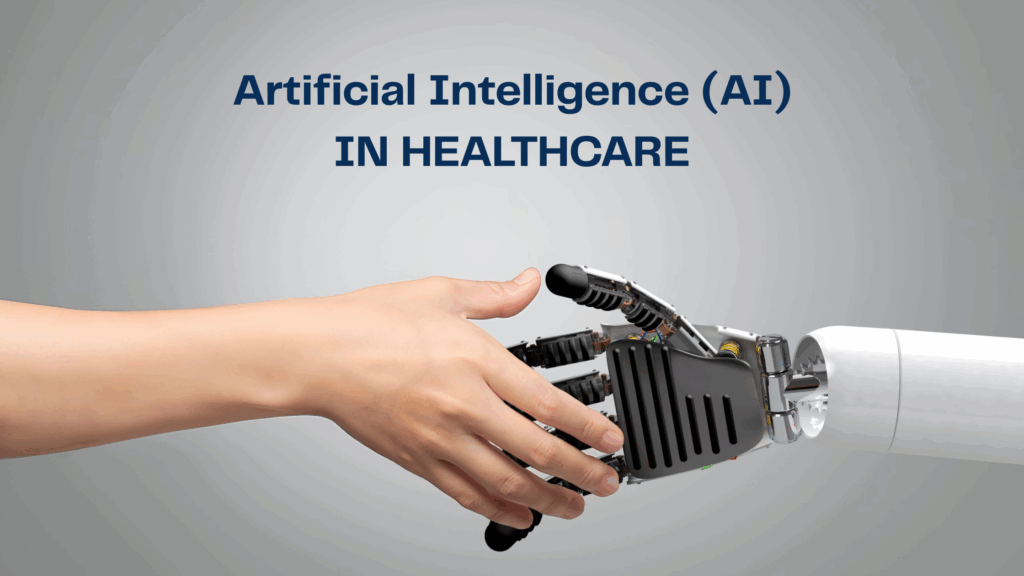

What Is Artificial Intelligence (AI) in Healthcare?
Artificial Intelligence (AI) has garnered significant interest and attention in healthcare in recent years, with its potential to revolutionize the industry by offering innovative solutions and improving patient outcomes.
AI encompasses technologies that enable machines to analyze complex data, learn from it, and make decisions based on patterns and trends.
In the healthcare sector, AI holds immense promise for enhancing diagnostics, treatment planning, personalized medicine, and operational efficiency.
AI in Healthcare for Diagnosis and Disease Detection
One of the most significant advantages of AI in healthcare is its ability to analyze vast amounts of data quickly and accurately. Medical data, such as patient records, lab results, imaging scans, and genomic information, can be processed much more efficiently by AI
algorithms than by human clinicians.
This enables healthcare providers to make informed decisions more rapidly, leading to earlier diagnoses and timely interventions for patients. AI-powered diagnostic tools have shown great potential in improving the accuracy and speed of disease detection.
For example, machine learning algorithms can analyze medical images, such as X-rays, MRIs, and CT scans, to identify abnormalities or patterns indicative of disease.
These tools can assist radiologists and other healthcare professionals in detecting diseases like cancer, vascular abnormalities, and fractures with greater precision, reducing the chances of misdiagnosis and improving patient outcomes.
AI-Powered Predictive Analytics
Furthermore, AI-driven predictive analytics can help healthcare providers identify patients at risk of developing certain conditions or experiencing adverse events.
By analyzing patient data and identifying factors that contribute to health risks, AI algorithms can support care teams in implementing preventive measures and interventions to mitigate those risks.
This proactive approach to healthcare can lead to better management of chronic conditions, reduced hospital readmissions, and improved overall patient health.
AI in Personalized Medicine
In addition to diagnostics and predictive analytics, AI has also proven beneficial in the realm of personalized medicine. By analyzing individual patient data, including genetic information, medical history, and lifestyle factors, AI algorithms can help healthcare providers tailor treatment plans to each patient’s specific needs.
This personalized approach to care can lead to more effective treatments, fewer adverse reactions, and better treatment outcomes for patients.
AI for Healthcare Administration and Operational Efficiency
Moreover, AI solutions are being increasingly utilized to streamline administrative processes and enhance operational efficiency in healthcare settings. For instance, chatbots and virtual assistants powered by AI can handle routine tasks like appointment scheduling, medication reminders, and patient inquiries, freeing up healthcare staff to focus on more complex and critical aspects of patient care.
AI-enabled systems can also optimize resource allocation, improve supply chain management, and enhance overall operational performance in healthcare organizations.
Challenges of Artificial Intelligence in Healthcare
Despite the numerous benefits of AI in healthcare, there are also challenges and considerations that need to be addressed.
Data privacy and security concerns, regulatory compliance, algorithm bias, and the need for human oversight and validation are critical
issues that must be carefully managed to ensure the safe and ethical use of AI in healthcare.
Conclusion
In conclusion, the importance and utility of Artificial Intelligence in healthcare cannot be overstated.
From improving diagnostics and treatment planning to enabling personalized medicine and enhancing operational efficiency, AI has the potential to transform the way healthcare is delivered and experienced.
As technology continues to advance and AI applications in healthcare evolve, it is essential for healthcare providers, policymakers, and
stakeholders to collaborate in harnessing the full potential of AI to improve patient outcomes, reduce healthcare costs, and ultimately enhance the quality of care for all.
AI can support modern healthcare, but medical decisions still require appropriate clinical evaluation and professional guidance. If you have health concerns or need medical advice, consider discussing them with a Qualified doctor.