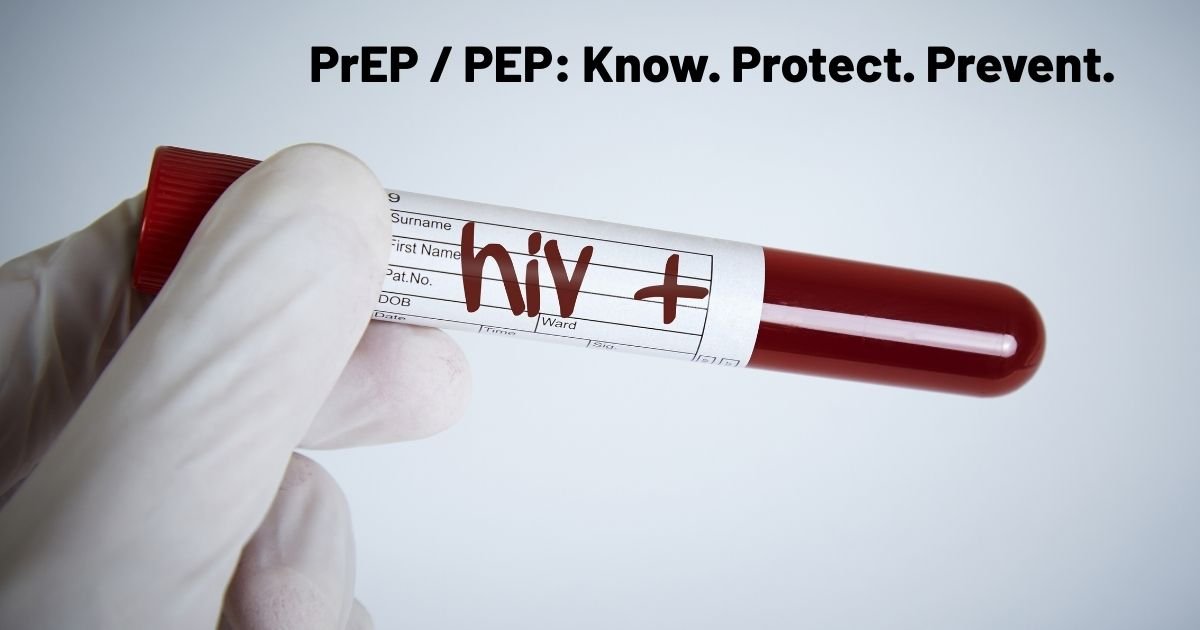
Despite decades of medical progress, HIV remains one of the most significant public health challenges globally.
While treatment has transformed HIV from a fatal disease into a manageable chronic condition, preventing new infections remains equally important.
This is where two highly effective biomedical tools come into play — PrEP (Pre-Exposure Prophylaxis) and PEP (Post-Exposure Prophylaxis).
Yet, many people still don’t know what these terms mean, who should take them, or how they work.
Awareness is low, misinformation is high, and stigma still surrounds sexual health conversations.
It’s time we change that.
This blog aims to break down what PrEP and PEP are, why they are important, who needs them, and how they can help us move towards an HIV-free future.
Understanding the Basics
What is PrEP?
PrEP stands for Pre-Exposure Prophylaxis.
It is a preventive medication taken before potential exposure to HIV to reduce the risk of acquiring the infection.
Think of it like taking malaria prophylaxis before traveling to an endemic area.
When taken consistently, PrEP can reduce the risk of HIV from sexual exposure by more than 99%, and from injection drug use by around 74% or more.
It is safe, effective, and recommended by WHO, CDC, and NACO.
What is PEP?
PEP stands for Post-Exposure Prophylaxis.
It is a short course of antiretroviral drugs taken to prevent HIV after potential exposure.
But timing is everything — PEP must be started within 72 hours of exposure, and the sooner the better.
While PrEP protects you beforehand, PEP is your emergency shield after an unexpected situation such as unprotected sex, condom breakage, sexual assault, or occupational exposure like needle-stick injuries.
Why Do We Even Need PrEP and PEP?
The world has made significant progress in HIV treatment, but prevention remains the most powerful tool.
New HIV infections still occur daily — often simply due to lack of awareness or hesitation to seek help.
Here’s why these prevention strategies matter deeply:
1. They Put Prevention in Your Hands
For years, prevention relied mainly on condoms and behavioural modification.
Both are crucial, but PrEP and PEP give individuals an added layer of control over their sexual health.
In a world where intimacy, spontaneity, and human behaviour are complex, having a preventive option empowers people to take responsibility for their health without fear.
2. Protects High-Risk Populations
Certain groups have a higher vulnerability to acquire HIV due to biological, social, and behavioural factors.
These include:
– Men who have sex with men (MSM)
– Serodiscordant couples (one partner HIV+ on ART, the other HIV–)
– Sex workers
– People who inject drugs
– Individuals with multiple sexual partners
– People who have frequent condom-less sex
– Those who regularly contract STIs
For them, PrEP is not just an option — it can be a life-changing protection tool.
3. Crucial in Accidental or Unexpected Exposure
Condom break during sex?
Forgot protection during a moment of passion?
Healthcare worker exposed to blood?
Survivors of sexual assault?
PEP becomes a lifesaver in such situations — but only if sought fast. Every hour counts.
4. Reduces HIV Transmission Dramatically
If widely implemented, PrEP and PEP can bring down community HIV transmission significantly.
Countries that successfully promoted PrEP witnessed a drop in new HIV cases among high-risk groups.
Imagine its impact if made mainstream in schools, colleges, clinics, and public health programs.
How Does PrEP Work?
PrEP is typically a daily oral pill, most commonly a combination of tenofovir with emtricitabine.
When taken correctly, the drug builds up in the bloodstream and blocks HIV from replicating even if it enters the body.
It must be prescribed by a medical professional after baseline tests including HIV status, kidney function, and hepatitis screening.
Many ask: “Can I start PrEP today and have sex tonight?”
No — protective levels usually require 7 days for receptive anal sex and 21 days for vaginal exposure. Consistency is key.
How Does PEP Work?
PEP involves taking triple antiretroviral therapy daily for 28 days.
The goal is to stop HIV from establishing infection after entry.
But it MUST be started early — preferably within 2 hours and absolutely not after 72 hours.
Before starting PEP, an HIV test is performed to ensure the person is HIV-negative.
Followup testing is done at 4-6 weeks, 3 months, and sometimes 6 months.
Who Should Consider PrEP?
You may benefit from PrEP if:
1. You have a partner living with HIV
2. You have multiple sexual partners
3. You don’t use condoms consistently
4. You engage in high-risk sexual practices
5. You are a man who has sex with men
6. You share needles for drug use
7. You frequently get STIs
8. You desire control and peace of mind in your sexual life
9. PrEP is not about promiscuity. It is about protection and responsibility.
Who Should Seek PEP?
You should immediately go to a doctor/hospital for PEP if:
– You had unprotected sex with unknown or positive HIV status
– Condom broke or slipped during intercourse
– You were sexually assaulted
– You had needle exposure or shared needles
– You had occupational exposure (healthcare worker)
Remember: PEP is an EMERGENCY — not a substitute for regular protection.
Busting Some Common Myths
1. “PrEP or PEP encourages unsafe sex.”
Reality: They reduce risk. Safe sex + PrEP/PEP = strongest protection.
2. “Only LGBTQ+ people use PrEP.”
Reality: HIV doesn’t discriminate. Anyone sexually active can benefit.
3. “If I take PrEP, I won’t get STIs.”
Reality: PrEP prevents HIV but not syphilis, gonorrhoea, chlamydia etc. Condoms remain essential.
4. “PEP will work even after many days.”
Reality: After 72 hours, effectiveness drops drastically. Don’t delay.
The Bigger Picture: Normalizing Prevention
The beauty of PrEP and PEP lies not only in their scientific efficacy but in what they represent — choice, freedom, empowerment, and stigma-free sexuality.
Sexual health should not be whispered about. It should be an open conversation in clinics, homes, campuses, and society.
The more people know about PrEP & PEP, the fewer HIV infections we will see.
Final Message:
HIV today is preventable. We have the tools. What we need next is awareness.
PrEP gives you confidence before exposure, PEP gives you safety after accidental risk — both are powerful shields when used correctly.
If you or someone you know could benefit from either, consult a healthcare professional.
Knowledge saves lives — and sharing it saves many more.
Let’s move towards a future where prevention is celebrated, awareness is widespread, and HIV transmission continues to fall every year.
Be informed. Be protected. Be responsible.
Because prevention isn’t just medicine — it’s empowerment.
Thank you sir for your valuable advice