Introduction
The relationship between human beings and their environment has always been complex, dynamic, and deeply interwoven.
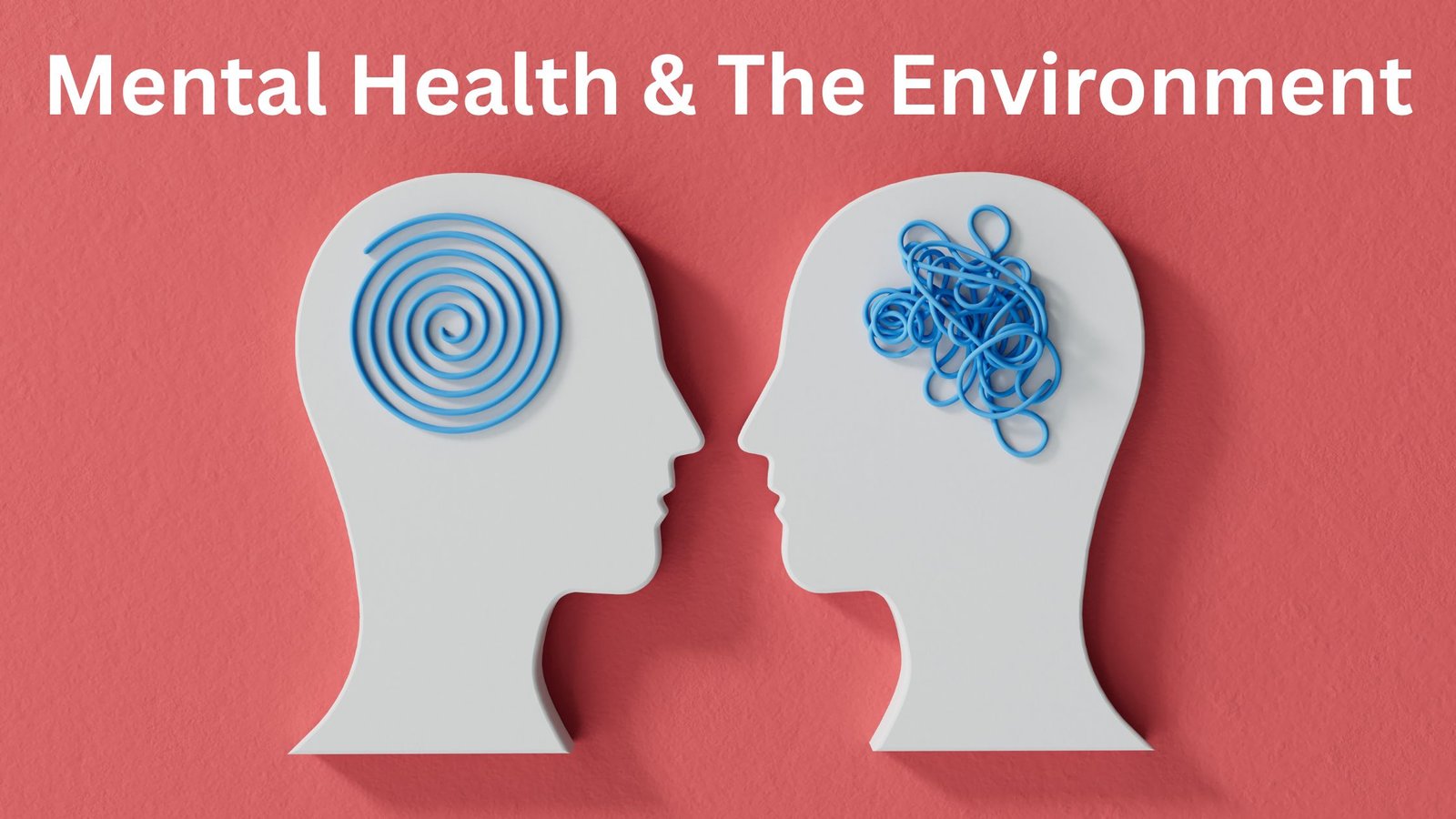
While environmental discussions traditionally focus on physical health outcomes—such as respiratory illness from pollution or dehydration from heat—an emerging and equally pressing crisis is gaining recognition: the impact of the environment on mental health.
From the trauma of climate disasters to the subtle psychological toll of urban noise or rising temperatures, our mental well-being is increasingly influenced by the spaces we live in.
In India, where both mental health stigma and environmental degradation are prevalent, this intersection represents an urgent public health concern that demands awareness, action, and innovation.
How the Environment Impacts Mental Health
1. Climate Change and Psychological Stress
As the planet warms, extreme weather events like floods, cyclones, and droughts are becoming more frequent.
These natural disasters don’t just destroy infrastructure—they also displace families, disrupt communities, and traumatize survivors.
Post-traumatic stress disorder (PTSD), depression, and anxiety disorders are increasingly reported among climate disaster survivors.
A 2022 study in Kerala showed that residents affected by repeated floods had elevated rates of depression and suicidal ideation, particularly among women and children.
Heatwaves, such as the one currently gripping parts of India with temperatures soaring above 48°C, are also associated with increased aggression, irritability, and sleep disorders—all contributing to deteriorating mental health.
2. Air Pollution and Brain Health
Air pollution, especially fine particulate matter (PM2.5), is not just a cause of asthma and cardiovascular diseases—it’s also linked to neurological and psychiatric conditions.
Recent research from AIIMS Delhi indicates a strong correlation between high air pollution levels and increased outpatient visits for anxiety and depression.
Children exposed to polluted environments are more likely to experience developmental delays and cognitive impairment.
Brain inflammation caused by pollutants may play a role in neurodegenerative diseases like Alzheimer’s and Parkinson’s, as well as mental illnesses like schizophrenia.
3. Urban Living and Emotional Isolation
India’s rapid urbanization has created crowded, noisy, and often socially isolating environments.
While cities offer economic opportunities, they also present unique mental health challenges:
Lack of green spaces, constant noise, long commutes, and poor air quality can increase stress and reduce overall well-being.
Slum dwellers and migrant workers are particularly vulnerable due to poor living conditions, lack of privacy, and minimal access to healthcare.
Moreover, the pace and anonymity of urban life often leads to emotional disconnection and an increase in substance abuse, depression, and anxiety.
Vulnerable Populations
Women and Children
Women in environmentally stressed areas (e.g., drought-prone zones) face added burdens of water collection, food insecurity, and household care.
These stressors, coupled with gender-based violence during displacement events, severely affect their mental well-being.
Children, especially those growing up in polluted or disaster-prone areas, are more likely to suffer from developmental trauma, poor academic performance, and low self-esteem.
Elderly
Older adults often experience heightened fear and helplessness during environmental disasters, especially if they are immobile or dependent.
They are also more likely to develop depression due to isolation exacerbated by climate stressors.
Farmers
India’s farming communities, particularly in states like Maharashtra, Madhya Pradesh, and Telangana, face increasing climate-linked distress.
Drought, unseasonal rains, and crop failure are closely tied to the alarming rate of farmer suicides.
The mental health of farmers must be viewed through the dual lens of environmental justice and social welfare.
Eco-Anxiety: A Modern Mental Health Challenge
A growing number of people, especially the youth, are experiencing eco-anxiety—a chronic fear of environmental doom.
In 2021, a global survey published in The Lancet revealed that 59% of youth aged 16-25 felt extremely worried about climate change, and over 45% said it affected their daily lives.
In India, where environmental degradation is visible and often extreme, this anxiety is compounded by a sense of helplessness, especially in regions with limited civic engagement and policy response.
Nature as a Healer: The Protective Role of Environment
While a damaged environment poses risks, a healthy one can be profoundly restorative for mental health.
Evidence shows that:
Spending time in nature, even for 20 minutes a day, can lower cortisol levels, reduce anxiety, and improve mood.
Green spaces, such as parks and community gardens, promote social interaction, physical activity, and emotional balance.
Nature therapy or “ecotherapy” is now being integrated into mental health care in urban settings, including Indian cities like Bengaluru and Pune.
Programs like Japan’s “forest bathing” (shinrin-yoku) are inspiring similar models in India, emphasizing the healing effects of reconnecting with natural surroundings.
Digital and Policy Solutions
Tech Interventions
Digital mental health tools such as chatbots, tele-counseling, and AI-based mental health apps are proving useful in low-resource settings.
In environmentally vulnerable areas where access to psychologists is limited, these tools can provide first-line support.
Startups like Wysa and InnerHour are already offering app-based therapy platforms in India, and there’s a growing push to tailor these for climate-affected communities.
Policy Recommendations
To effectively address the mental health-environment nexus, India must:
1. Integrate mental health services into disaster response plans.
2. Train community health workers to identify and manage eco-stress disorders.
3. Include green spaces in urban development mandates.
4. Fund research on environmental determinants of mental illness.
5. Launch awareness campaigns to reduce stigma and promote mental resilience.
The National Mental Health Programme (NMHP) and Ayushman Bharat Digital Health Mission offer promising platforms for scaling these interventions.
Conclusion: A Call for Environmental Mental Justice
In a nation as diverse and environmentally vulnerable as India, safeguarding mental health means looking beyond individual psychology to broader ecological realities.
Whether it’s the air we breathe, the cities we inhabit, or the climate shifts we endure, the environment is both a silent aggressor and a potential healer.
Addressing mental health in this context requires a multisectoral approach—combining public health, climate science, urban planning, and technology.
By recognizing and responding to the mental burdens of environmental change, we not only protect minds but also build a more compassionate, sustainable future.