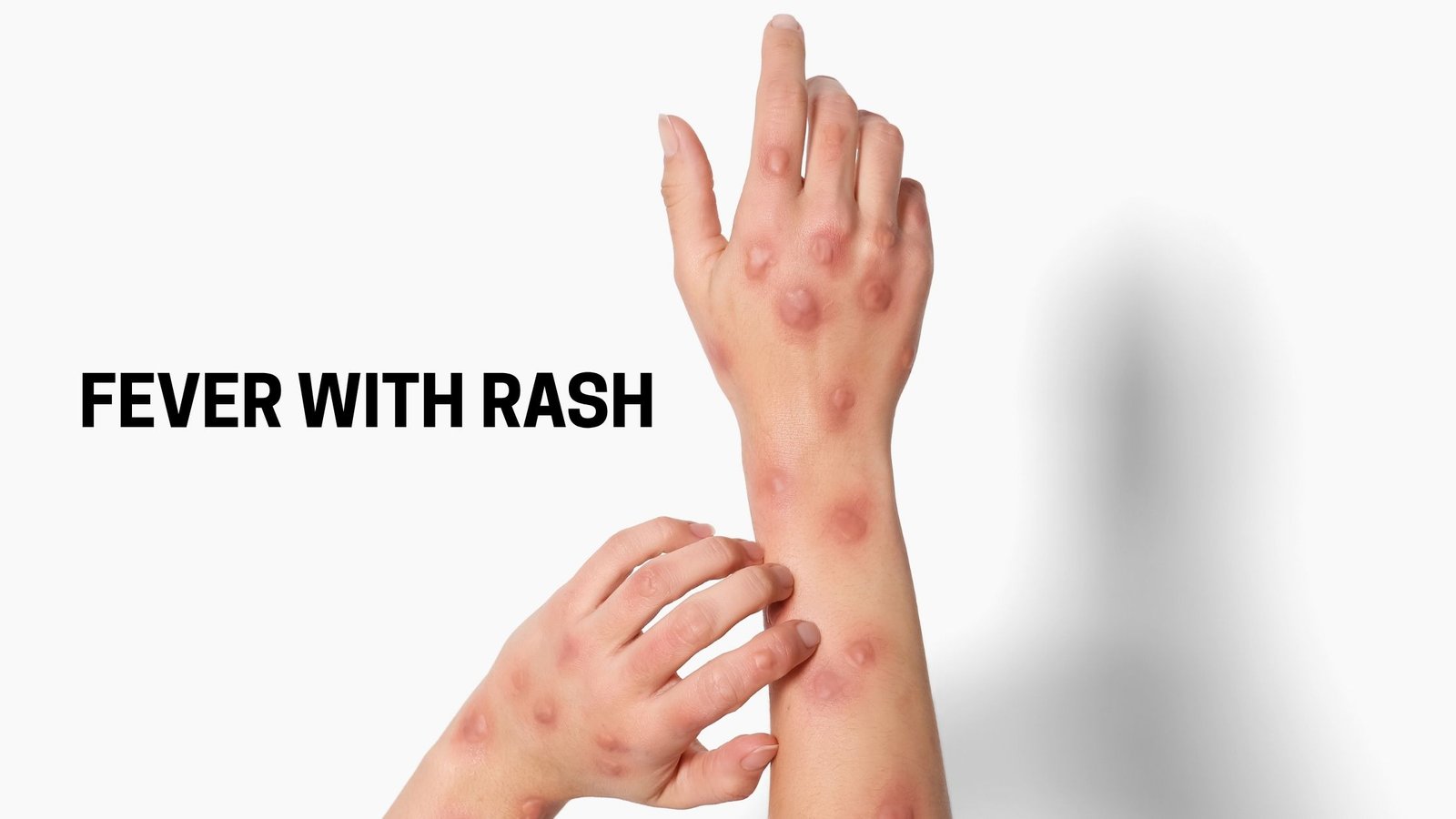
Fever accompanied by a rash is a common clinical presentation that spans across various age groups and encompasses a wide differential diagnosis.
The combination can represent benign self-limited conditions or signal life-threatening illnesses requiring urgent intervention.
For clinicians, recognizing patterns and timelines is crucial to narrowing the diagnosis and initiating timely treatment.
Understanding the Symptom Complex
Fever signifies a systemic inflammatory response, often to infection, while rash indicates a dermatological manifestation.
Together, they point to a systemic process—infectious, inflammatory, autoimmune, or drug-induced.
The evaluation of fever with rash hinges on a systematic approach:
1. Age of the patient
2. Timeline of rash appearance in relation to fever
3. Morphology of the rash
4. Distribution and evolution
5. Associated systemic symptoms (joint pain, lymphadenopathy, mucosal involvement)
Classification Based on Rash Morphology:
1. Maculopapular Rash
Examples: Measles, rubella, dengue, drug reactions
Features: Flat or slightly raised red lesions
Progression: Often starts on face or trunk and spreads outward
2. Petechial or Purpuric Rash
Examples: Meningococcemia, dengue, thrombocytopenia
Features: Non-blanching, small hemorrhagic spots
Urgency: Often indicates a serious or life-threatening condition
3. Vesicular or Bullous Rash
Examples: Varicella (chickenpox), herpes simplex, hand-foot-mouth disease
Features: Fluid-filled lesions, may crust over
4. Urticarial Rash
Examples: Allergic reactions, serum sickness, viral infections
Features: Transient wheals with itching, blanchable
5. Desquamating Rash
Examples: Scarlet fever, Kawasaki disease, staphylococcal scalded skin syndrome
Features: Skin peeling during recovery phase
Infectious Causes of Fever with Rash
1. Viral Infections
Measles: High fever, cough, conjunctivitis, Koplik spots, then rash
Rubella: Low-grade fever, lymphadenopathy, pink rash starting on face
Dengue: Biphasic fever, retro-orbital pain, rash during defervescence
Chikungunya: High fever, arthralgia, morbilliform rash
Enteroviruses: Hand-foot-mouth disease (vesicular rash on palms, soles, mouth)
COVID-19: Varied rashes (maculopapular, urticarial, pseudo-chilblains)
2. Bacterial Infections
Scarlet fever: Group A Streptococcus; fine sandpaper rash, strawberry tongue
Meningococcemia: Sudden high fever, petechiae, rapid deterioration
Typhus (Rickettsial diseases): Fever with rash on trunk spreading to extremities
Syphilis (secondary stage): Fever with generalized rash including palms and soles
3. Fungal and Parasitic Infections
Though rare, systemic fungal infections like histoplasmosis or parasitic infections like
malaria (with splenomegaly and petechiae) can present with skin signs
Non-Infectious Causes
1. Drug Reactions
Types: Morbilliform (most common), fixed drug eruption, Stevens-Johnson Syndrome (SJS),
Toxic Epidermal Necrolysis (TEN)
Clues: Temporal relationship with new medications, mucosal involvement
2. Autoimmune Disorders
Systemic Lupus Erythematosus (SLE): Malar rash, photosensitivity, fever
Kawasaki Disease (in children): Prolonged fever, mucosal changes, rash, conjunctivitis
Still’s Disease (adult or juvenile): Daily fever spikes, salmon-pink rash
3. Vasculitis
Examples: Henoch-Schönlein Purpura (HSP), polyarteritis nodosa
Features: Purpura, fever, joint and abdominal pain
Approach to Evaluation
History
– Onset, duration of fever and rash
– Travel history, exposure to sick contacts or animals
– Vaccination status
– Drug intake
– Sexual history, tick bites, or insect exposure
– Physical Examination
– Rash type, distribution, and progression
– Mucosal involvement
– Lymphadenopathy, hepatosplenomegaly
– Neurological signs (meningitis, encephalitis)
Investigations
– CBC with differential: eosinophilia (allergy), leukocytosis/leukopenia
– Platelet count: thrombocytopenia (dengue, sepsis)
– Liver and renal function tests
Blood cultures
– Serologies: Measles IgM, dengue NS1/IgM, chikungunya IgM, Widal
– Skin biopsy (if unclear or chronic)
– CSF analysis (if meningitis suspected)
Red Flag Signs Indicating Severe Illness
– Hypotension, altered mental status
– Non-blanching petechiae/purpura
– Rapidly spreading or necrotic rash
– Mucosal erosions (SJS/TEN)
– Prolonged fever >5 days with systemic features (Kawasaki, SLE)
– Management Principles
General Measures
– Antipyretics for fever
– Adequate hydration and rest
– Monitoring for complications (especially in dengue, meningococcemia)
Specific Therapy
– Bacterial Infections: Empirical antibiotics (ceftriaxone, doxycycline in rickettsial)
– Viral: Usually supportive; antivirals for herpes, influenza, etc.
– Dengue/Chikungunya: Supportive; platelet monitoring in dengue
– Drug Reactions: Stop offending drug; antihistamines, corticosteroids, ICU care in TEN
– Autoimmune: Immunosuppressants, steroids
– Kawasaki Disease: IVIG and aspirin
Special Considerations in Pediatrics
Many viral exanthems (measles, rubella, roseola, erythema infectiosum) are common in children.
Vaccination plays a key role in prevention Kawasaki disease should be considered in children with prolonged unexplained fever
Conclusion
Fever with rash is not a diagnosis but a symptom complex requiring a structured clinical approach.
From simple viral infections to life-threatening conditions like meningococcemia or Stevens-Johnson Syndrome, the stakes can be high.
Clinicians must integrate the history, clinical findings, and timely investigations to avoid missed diagnoses and initiate life-saving treatment where needed.
Public health measures like vaccination, early diagnosis, and patient education are crucial to managing and preventing many of these conditions.
For medical professionals and the public alike, recognizing the warning signs and seeking prompt care can make all the difference.
Thank you so much sir for your valuble health tips