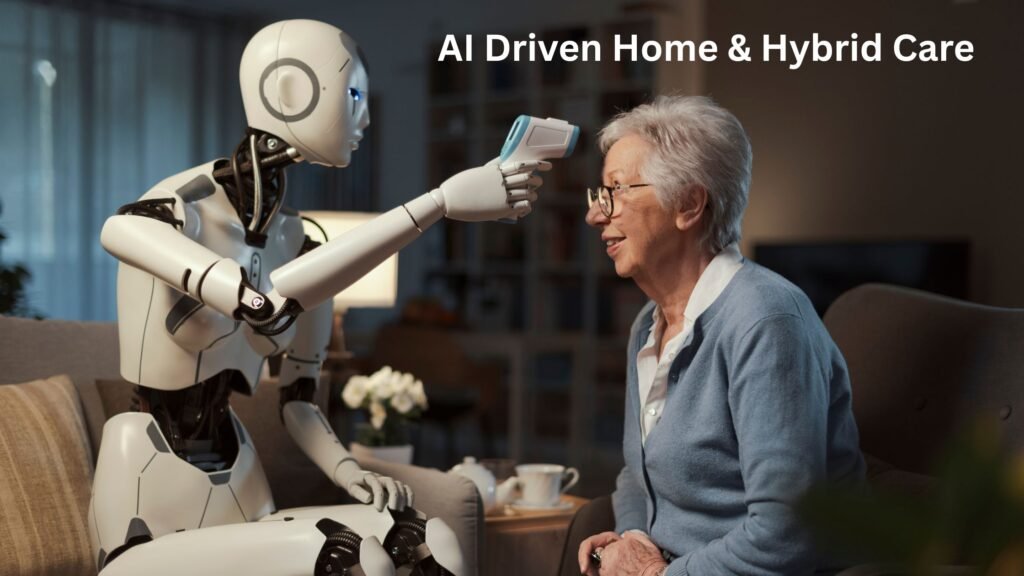
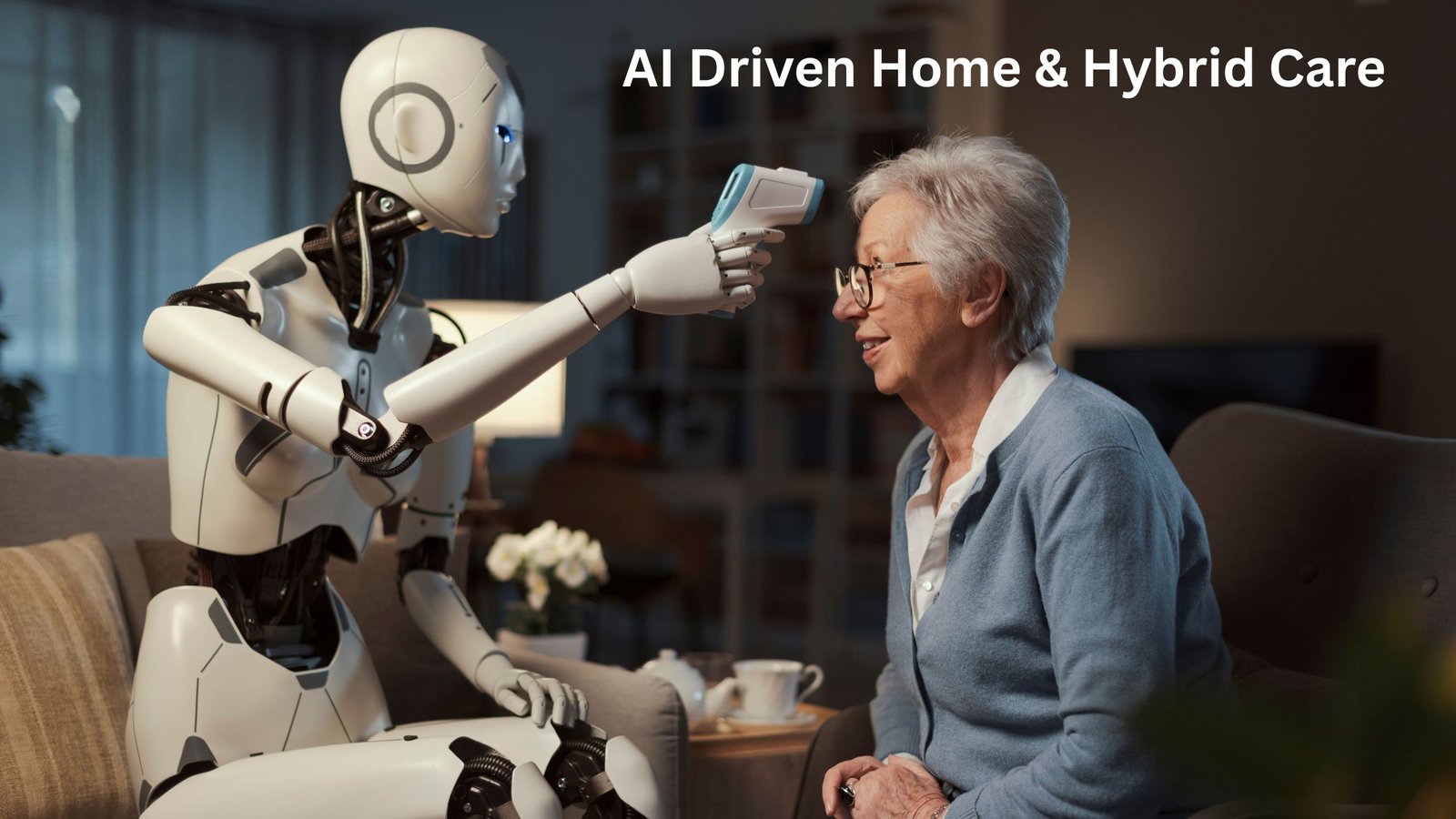
In 2025, healthcare is undergoing a profound transformation: the home is becoming a frontline for hospital‑grade care, powered by artificial intelligence (AI).
No longer just a vision, AI‑driven home and hybrid care models are delivering personalized, accessible, and efficient healthcare outside the walls of traditional institutions.
1. Why Home-Centered Hybrid Care Is Rapidly Emerging
Home as the central care hub: Experts like Dr. Shravan Verma, CEO and cofounder of Singapore-based Speedoc, predict that hospital-level services will increasingly move into homes—supported by digital infrastructure and patient readiness . This shift isn’t a
temporary pivot or pandemic-era anomaly—it’s reshaping how we define healthcare delivery.
Patient demand for convenience and personalization: Today’s patients expect care that’s not just effective, but also tailored, timely, and tech-enhanced. Hybrid care models blend in-person visits and virtual interactions, with remote monitoring to maintain continuous
oversight.
AI: the silent orchestrator: AI doesn’t replace clinicians—it augments them. It excels in triage, logistics, risk prediction, and administering routine follow-up, freeing human providers to focus on complex, empathy-driven care.
2. How AI Empowers Hybrid Home Care
AI-Triage & Predictive Risk Management
AI algorithms screen and triage patients through digitized health questionnaires and vital signs — flagging red flags that require urgent attention. At Speedoc, AI systems monitor pulse oximetry, blood pressure, and even passive sensors. Alerts trigger preemptive interventions—like redirecting a patient showing early hypoxia to a nurse visit, possibly avoiding an ER trip .
Logistics & Workforce Optimization
Routing caregivers based on location, urgency, and resource availability. This dynamic scheduling ensures timely, coordinated visits without unnecessary delays or travel—breaking the productivity constraints of traditional home health services.
Documentation & Admin Support
Clinicians spend significant time on documentation. AI-powered tools can auto-generate notes and support coding, allowing providers to focus on patient care. Verma shares that his team uses AI to “reduce admin burden” and give “actionable insights” so the focus stays on relationships, not paperwork .
Predictive & Preventive Capabilities
Looking ahead, AI will evolve from reactive alerts to proactive care orchestration. Imagine automated reminders, routine follow-ups for chronic conditions, and AI copilots assisting clinicians’ decision-making, creating a smarter continuum of care.
3. Human + AI: A Powerful Duo
Empathy cannot be automated
AI tools lack the nuance of human presence—empathy, contextual judgment, and adaptiveness during unpredictable moments. As Dr. Verma notes, AI might identify a heart attack—but human clinicians determine the next steps: arrange hospital transfers, family communication, continuity of care .
Clinicians as relational anchors
By automating administrative tasks, AI enables clinicians to strengthen patient relationships. Long-term recovery and complex care depend not just on clinical knowledge, but also on trust built through genuine human connection.
Governance and transparency are non-negotiable
AI systems must be auditable and bias-aware. Safety measures are vital to ensure that AI tools support—not mislead—clinical decisions. Dr. Verma advocates for governance “baked into every AI deployment” to guard against hallucinations and context mismatch.
4. Real-World Success: Speedoc in Singapore
Speedoc is pioneering this hybrid AI-home care model in Singapore, a country notable for its robust digital readiness:
Tech ecosystem ready: Populations accustomed to digital health adoption allowed faster deployment of virtual care models .
Policy alignment: The Singaporean government invests heavily in digital health innovation, creating a favorable environment for startups.
Patient trust: Users now expect medical-grade services at home—when AI enhances reliability and responsiveness, trust increases.
Outcome impact: Prevented ER visits through proactive AI alerting. Streamlined logistics resulting in faster and more cost-effective care delivery. Enhanced clinician experience, reducing burnout by offloading administrative tasks.
5. Overcoming Challenges & Ethical Considerations
Digital Divide & Equity
Not everyone has access to home monitoring devices or fast internet. Hybrid care must avoid deepening disparities—through subsidy models and inclusive deployment strategies.
Data safety & privacy
Collecting continuous home health data demands strong cybersecurity. Clear protocols and encryption are essential to avoid compromising patient privacy.
Clinician resistance & change fatigue
Adoption can falter if systems are cumbersome or untrustworthy. Training and co-design with clinicians can foster acceptance and alignment.
Regulatory alignment
AI in healthcare requires transparent approvals, auditability, and bias mitigation. Policymakers and innovators must collaborate to ensure safe, ethical deployment.
6. What’s Next: Scaling Hybrid Care Globally
Expansion of AI capabilities
We’ll witness AI achieving deeper predictive intelligence—identifying early signs of delirium, decompensation, or non-adherence—and embedding context-aware treatment suggestions.
Integration with autonomous platforms
Imagine AI‑enabled drones and mobile clinic units that bring diagnostics and treatments directly to neighborhoods—empowered by telehealth and robot-assisted care.
Community-based AI care networks
Local hubs may coordinate care teams—clinical and non-clinical—enhanced by AI triage and scheduling, ensuring healthcare at scale without overstretching hospitals.
Focus on outcomes & equity
The future of home & hybrid care hinges on maintaining outcome-oriented principles: better health, lower costs, improved patient experience, and equitable access for all communities.
7. Conclusion: Leading with Outcomes, Not Tech
AI is not the star of healthcare—it’s a silent partner.
Its true value lies in simplifying care, improving outcomes, preserving empathy, and expanding access.
As Dr. Verma aptly states: patients don’t ask “Is it AI?” They ask “Is it faster, safer, more personalized?”
The real win for healthcare lies in designing systems that quietly work in the background— optimizing triage, logistics, and routine care—while clinicians bring empathy, expertise, and human connection.
The result? A smarter, more scalable, and more human-centric care model fit for our era.